



How to Choose a Reliable LCD Display Manufacturer for Your Project
2026-05-07 17:56:36Q: How do I choose a reliable LCD display manufacturer?A: The best LCD display manufacturer should offer stable quality, strong engineering support, customization capability, fast communication, and reliable long-term supply.Why Supplier Selection MattersChoosing the wrong LCD supplier can lead to:Project delaysUnstable qualityCompatibility issuesBacklight failuresTouch problemsLong lead timesPoor technical supportA reliable supplier can significantly reduce development risk.7 Key Factors to Evaluate1. Engineering SupportA strong engineering team is essential for:Interface debuggingDriver IC selectionEMI optimizationTouch tuningPower consumption optimization2. Interface CompatibilityDifferent projects require different interfaces.InterfaceTypical UseSPISmall embedded displaysRGBMid-level MCUsMIPI DSIHigh-speed modern systemsHDMIRaspberry Pi and Linux systemsLVDSIndustrial equipment3. Customization CapabilityGood suppliers should support:Custom FPCHigh brightnessOptical bondingWide temperature designCover glass customizationWaterproof sealing4. Quality ControlAsk suppliers about:Aging testsESD testingReliability testingIncoming material inspectionBurn-in process5. Lead Time StabilityA reliable supplier should provide realistic delivery schedules.Production TypeTypical Lead TimeStandard product3 to 7 daysSemi-custom3 to 5 weeksFully custom6 to 10 weeks6. Long-Term SupplyIndustrial projects often require 5 to 10 years lifecycle support.7. Communication SpeedFast engineering communication reduces project risk dramatically.Common Mistakes When Choosing SuppliersChoosing only based on lowest priceIgnoring engineering capabilityNot checking testing standardsNo validation samplesNo long-term supply confirmationConclusionFor most embedded and industrial projects, the best LCD manufacturer is not the cheapest supplier, but the one that provides stable quality, technical support, and long-term reliability.Recommended LCD Display SupplierSincrystal provides custom TFT LCD modules, HDMI displays, MIPI DSI displays, touch integration, and engineering support for industrial, medical, and smart device applications.
.webp%3E2026/04/29/799890507001989.webp "European Customer Visits Our Factory to Explore New Opportunities in Smart Display Solutions")
European Customer Visits Our Factory to Explore New Opportunities in Smart Display Solutions
2026-04-29 08:22:292026/04/29/799890972541061.webp" style=""/>On April 24, 2026, we were honored to welcome an important customer from Europe to visit our factory. To ensure a smooth and productive visit, we confirmed the full itinerary with the customer one day in advance and warmly received them on the morning of arrival.Based on the customer’s project requirements, we introduced and recommended our 1.8-inch knob display and 2.1-inch knob display solutions. The customer showed strong interest in both products, and we had in-depth discussions regarding product features, application scenarios, and future cooperation opportunities.2026/04/29/799891057807493.webp" style=""/>During the visit, we also presented our company profile and core business capabilities. The customer toured our production line, clean room, and reliability testing area, gaining a deeper understanding of our manufacturing standards, quality control processes, and engineering strengths.2026/04/29/799891136127109.webp" style=""/>2026/04/29/799891187208325.webp" style=""/>Through the factory tour and face-to-face communication, the customer experienced our comprehensive one-stop service capabilities, from product development and customization to production and quality assurance.This visit further strengthened mutual trust and laid a solid foundation for future cooperation. Sinocrystal look forward to building long-term partnerships with customers worldwide and continuing to deliver innovative and reliable display solutions.

Custom LCD Display Manufacturer: MOQ, Cost, Lead Time Explained
2026-03-11 17:57:17Q: What are the MOQ, cost, and lead time for custom LCD displays?A: Custom LCD display projects typically involve tooling cost, engineering validation, and production setup. MOQ, pricing, and lead time depend on display size, interface type, touch integration, and customization level.What Affects Custom LCD PricingSeveral factors impact pricing.FactorImpact on CostDisplay sizeLarger displays cost moreBrightnessHigh brightness increases costTouch panelAdds sensor and controller costOptical bondingImproves readability but adds costInterfaceMIPI DSI usually costs more than SPICover glassCustom glass increases toolingTypical MOQ for Custom LCD ProjectsCustomization LevelTypical MOQStandard moduleNo MOQ or very low MOQSemi-custom FPC500 to 1000 pcsFull custom design2000 to 5000 pcsTypical Development TimelineStageTypical TimeRequirement review1 to 3 daysEngineering design1 to 2 weeksSample production2 to 4 weeksTesting and validation1 to 2 weeksMass production4 to 8 weeksCommon Questions from OEM BuyersQ: Is tooling always required?A: Not always. Semi-custom modifications may avoid tooling costs.Q: What is the most cost-effective interface?A: SPI is usually the lowest cost, while MIPI DSI offers the best performance for advanced embedded systems.Q: Can small quantity prototype orders be supported?A: Yes. Many manufacturers support low-volume prototypes before mass production.How to Reduce Development CostUse standard LCD sizesReuse existing touch structuresChoose standard driver ICsAvoid unnecessary mechanical changesUse common interfacesConclusionThe best custom LCD strategy is balancing cost, lead time, and engineering complexity according to the final product requirements.Recommended LCD Display SupplierSincrystal supports custom TFT LCD development including HDMI displays, MIPI DSI modules, capacitive touch integration, optical bonding, and industrial display customization.
China vs Local LCD Suppliers: Cost, Quality and Lead Time Comparison
2026-02-05 18:00:48Q: Should OEM buyers choose Chinese LCD suppliers or local suppliers?A: Chinese LCD suppliers usually provide lower pricing, stronger customization capability, and faster engineering flexibility, while local suppliers may offer easier communication and regional logistics advantages.Cost ComparisonSupplier TypeTypical CostChina supplierLowerLocal supplierHigherChinese manufacturers benefit from integrated supply chains and large-scale production.Quality ComparisonQuality depends more on supplier management than country.Reliable Chinese suppliers can provide:Industrial-grade qualityReliability testingStable mass productionLong lifecycle supportLead Time ComparisonProcessChina SupplierLocal SupplierStandard samplesFasterModerateCustom developmentFasterSlowerLogisticsLonger shippingFaster local deliveryEngineering FlexibilityChinese suppliers are usually more flexible for:Custom FPCTouch integrationHDMI boardsMIPI DSI adaptationBrightness tuningEmbedded developmentRisks to ConsiderPotential risks include:Communication delaysTime zone differencesInconsistent supplier qualityLogistics complexityThese risks can be reduced by choosing experienced manufacturers.ConclusionFor most OEM and industrial projects, Chinese LCD suppliers provide the best balance between cost, customization capability, and production flexibility.Recommended LCD Display SupplierSincrystal provides custom LCD display solutions with engineering support, fast development cycles, and industrial-grade quality control.

Sinocrystal Packaging Solution for LCD Displays
2026-01-04 15:50:44Sinocrystal Packaging Solution: Protecting Every Display, Every MileIn the logistics and transportation of precision electronic products, packaging is more than just an outer layer—it is a critical safeguard for product quality. This is especially true for LCD displays, which are fragile and highly sensitive to environmental conditions. A well-designed and reliable packaging solution directly determines the success of delivery.At Sinocrystal, we fully understand our customers’ expectations for safe and intact delivery. That is why we never compromise on packaging. Today, we invite you to take a closer look at Sinocrystal’s professional packaging solution and see how a single lcd display is protected through multiple layers to safely travel across land and sea, arriving in your hands in perfect condition.1. A Solid Foundation: Thickened PET Vacuum-Formed TraysEvery reliable packaging solution starts from the bottom. Sinocrystal uses PET vacuum-formed trays with a thickness of no less than 1.2 mm as standard across our factory.Compared with ordinary trays, these thickened PET trays offer excellent toughness and durability. They provide strong bottom support for LCD displays, effectively preventing risks caused by deformation or insufficient strength during transportation.2026/01/04/759309888659589.webp" style=""/>2. Secure Fixation: High-Rigidity Flat Cardboard SupportLong-distance transportation inevitably involves vibration and shock. Cushioning alone is not enough—the display must be firmly secured.Sinocrystal uses high-rigidity flat cardboard inserts to tightly clamp the upper and lower layers of the displays. This fixation method ensures that the screen remains stable and immobile even under rough transportation conditions, significantly reducing the risk of impact damage.2026/01/04/759309983780997.webp" style=""/>3. Environmental Protection: Dual Moisture-Proof and Anti-Static MeasuresElectronic components are extremely sensitive to moisture and static electricity. To address this, Sinocrystal implements strict sealing and protection measures:Each lcd display is sealed in a professional anti-static plastic bag, effectively isolating it from dust and humidity.Desiccant packs are placed inside the bag to further absorb moisture. This dual protection system—anti-static sealing combined with moisture control—ensures that LCD displays remain in a dry, safe environment throughout storage and transportation.2026/01/04/759310617886853.jpg" style=""/>4. Double-Layer Armor: Box-in-Box Packaging DesignTo withstand external pressure and impact during transit, Sinocrystal adopts a highly secure double-box packaging structure:1.Inner Protection The properly protected displays are first packed into an inner K-grade corrugated carton, providing basic cushioning and fixation. 2.Outer Reinforcement The inner carton is then placed inside a larger, thicker reinforced outer carton. This “box-in-box” structure significantly enhances overall compression resistance. Even in the event of severe vibration or external pressure, the inner displays remain well protected and intact.2026/01/04/759310707736709.webp" style=""/>2026/01/04/759310836166789.jpg" style=""/>5. Labeling and SealingFinally, labels are applied and the cartons are sealed using H-shaped (I-type) sealing tape, completing the packaging process. Whether for domestic or international shipments, this packaging solution reliably meets transportation protection requirements.2026/01/04/759311045877893.webp" style=""/>Conclusion: Layered Protection for Peace of Mind DeliveryFrom thickened PET trays to double-layer cartons, from anti-static sealing to moisture-proof protection, Sinocrystal’s packaging solution addresses every critical detail.Layer by layer, we protect—so your products arrive safely. This is not just a packaging process, but Sinocrystal’s firm commitment to quality. With visible care and rigorous standards, we ensure that every LCD display you order arrives safely, intact, and on time. Choosing Sinocrystal means choosing reliability and peace of mind.

Can ESP32 Drive MIPI DSI Display? (Complete Guide + Solution)
2025-11-08 09:26:11Q: Can ESP32 directly drive a MIPI DSI display?A: Standard ESP32 chips cannot directly drive native MIPI DSI displays because MIPI DSI requires high-speed differential signaling and dedicated display hardware.Why ESP32 Cannot Directly Support Native MIPI DSIMIPI DSI requires:High-speed serial transmissionDedicated DPHY hardwareSpecialized timing controlHigh bandwidth supportTraditional ESP32 chips mainly support:SPIRGBI2CUARTAvailable Solutions1. Use HDMI Bridge BoardOne practical solution is using:ESP32 → HDMI Output → HDMI to MIPI Display Controller2. Use RGB to MIPI Bridge ICSome bridge ICs can convert RGB signals into MIPI DSI.3. Use ESP32-P4 or Advanced PlatformsNewer ESP32 variants may provide better display capability.Recommended Interfaces for ESP32InterfaceCompatibility with ESP32SPI LCDExcellentRGB LCDGoodMIPI DSIRequires bridge solutionBest Display Choices for ESP32Small DisplaysSPI TFT LCD2.4 inch to 3.5 inch displaysLarger DisplaysRGB TFT LCDHDMI-based display systemsCommon ESP32 Display ProblemsSlow Refresh RateUsually caused by SPI bandwidth limitation.Screen TearingOften related to insufficient framebuffer handling.Power IssuesBacklight current may exceed ESP32 board capability.ConclusionESP32 cannot directly drive native MIPI DSI displays, but bridge solutions and HDMI-based architectures can enable advanced display applications.Recommended LCD Display SupplierSincrystal provides ESP32-compatible LCD solutions including SPI displays, RGB displays, HDMI displays, and custom bridge board development.

AP Systems Invests KRW 60 Billion to Expand Production Facilities, Strengthening Its Global OLED and Semiconductor Equipment Business
2025-10-31 15:10:252025/10/31/736294331854981.webp" style=""/>According to Korean media reports, AP Systems, a leading company specializing in display and semiconductor manufacturing equipment, announced on October 16 that it has invested KRW 60 billion (approximately RMB 300 million) to acquire 15,000 square meters of cleanroom production facilities and land.With this acquisition, AP Systems’ total production capacity will reach 30,000 square meters, positioning the company to respond swiftly to the rapidly growing global demand for OLED equipment. The newly acquired facility meets the high cleanliness standards required for both front-end and back-end OLED manufacturing processes and is also equipped for semiconductor equipment production—enabling immediate equipment manufacturing capability.AP Systems stated that this strategic investment will enhance production efficiency and supply stability, while establishing a system that can flexibly adapt to future market expansion.Global 8th-Generation OLED Investments AcceleratingThe global display industry is currently witnessing a surge in 8th and 8.6-generation OLED line investments. Major panel makers including Samsung Display, BOE, Visionox, and TCL CSOT have announced new OLED production line projects and are accelerating construction plans.As OLED panels are rapidly expanding into IT devices such as laptops, tablets, and monitors, the demand for related manufacturing equipment is growing at an unprecedented pace. With this investment, AP Systems has secured immediate production capacity to meet the expansion needs of its global customers, further strengthening its competitiveness in the OLED equipment market.Building a Stable and Growth-Oriented FoundationAn AP Systems representative commented, “This investment is a strategic decision to enhance both business stability and long-term growth potential. With a solid financial foundation and continuous innovation, AP Systems will actively respond to the expansion of customer investments and further consolidate its leadership in the OLED and semiconductor equipment markets.”ConclusionAs OLED technology continues to penetrate IT applications and beyond, the display manufacturing equipment sector is entering a period of rapid growth. AP Systems’ latest expansion demonstrates its commitment to future-oriented investment and signals increasing competition and opportunities across the global OLED supply chain.

Medical Display Market Sees Strong Growth — New Opportunities for LCD Manufacturers
2025-10-24 13:59:552025/10/24/733798478708869.webp" style="width: 50%;"/>According to a recent report by Astute Analytica, the global medical lcd display market is experiencing steady expansion. The market size is expected to increase from USD 2.26 billion in 2024 to approximately USD 4.22 billion by 2033, achieving a compound annual growth rate (CAGR) of 7.6%.This growth is primarily driven by the rapid digitalization of healthcare systems worldwide. From diagnostic imaging and surgical navigation to telemedicine, high-resolution and color-accurate display technologies have become essential to ensure precise visualization and clinical reliability.LCD Remains a Core Technology in Medical DisplaysWhile emerging display technologies such as OLED and Mini-LED are gaining traction, LCD displays continue to dominate the medical sector thanks to their mature manufacturing process, cost efficiency, and stable performance.LCD panels maintain distinct advantages in several key medical applications:Diagnostic imaging systems (X-ray, CT, MRI) – excellent grayscale performance and brightness uniformity.Surgical monitors – high durability and anti-glare performance suitable for long-hour operations.Portable and handheld medical devices – low power consumption extends battery life.Shift from Consumer to Professional Displays: A New Direction for LCD ManufacturersAs the consumer electronics market for TVs and smartphones becomes saturated, LCD manufacturers are turning their focus toward high-value professional display segments, including medical, industrial control, and automotive displays.These specialized markets share several characteristics:Longer product lifecycles and higher profit margins.Stricter performance and certification requirements.Strong demand for customization and long-term supply stability.For LCD Display manufacturers, this represents an opportunity to move beyond price competition and focus instead on technical innovation and market specialization.Future Trends in the Medical Display MarketOver the next decade, the medical display industry is expected to evolve around several key trends:Higher resolution and wider color gamut, compliant with DICOM standards for accurate medical imaging.Anti-bacterial and anti-glare coatings to improve hygiene and usability.Smart display systems integrated with AI-based image analysis and cloud connectivity.Energy-efficient, low-power designs aligned with hospitals’ sustainability goals.LCD manufacturers that can align their R&D efforts with these trends — enhancing image accuracy, reliability, and compliance — will be well-positioned to capture growth in this expanding market.ConclusionThe strong growth of the medical lcd display market is injecting new vitality into the LCD industry. As mainstream consumer demand levels off, the professional and specialized display segments will become the next frontier for innovation and profitability.Through continuous technological upgrades, quality assurance, and niche-market focus, LCD technology is expected to maintain a strong presence and deliver sustained value in the professional display landscape.
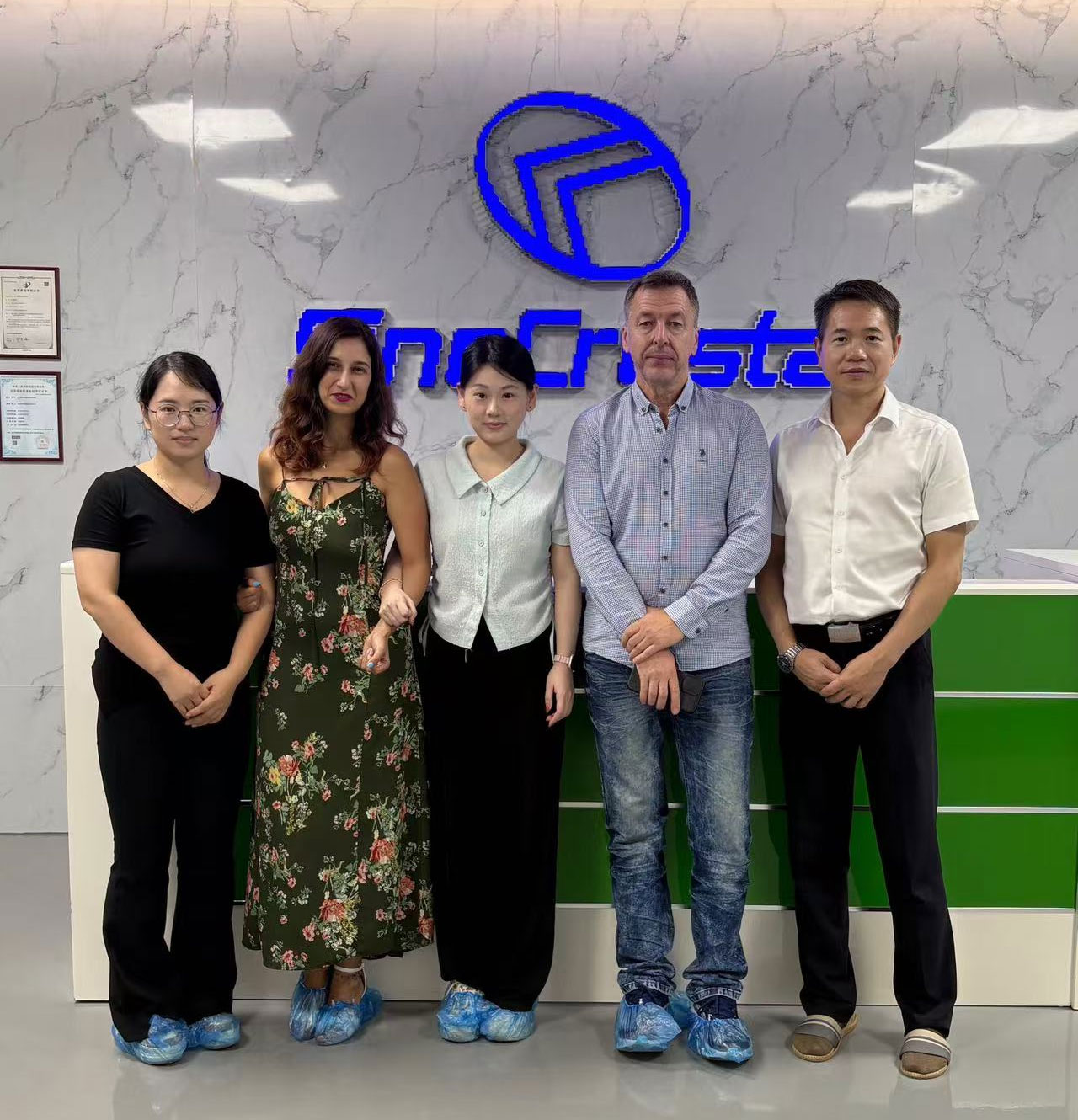
European Customer Visits Our Factory to Discuss 2.0'' and 7'' TFT LCD Display Projects
2025-10-14 20:34:402025/10/14/730354857943173.jpg" style="width: 619.79px;height: 644.02px;"/>On September 30, we were pleased to welcome a European customer to our Dongguan factory for an in-depth visit and technical discussion. The main focus of this meeting was the development and cooperation on 2.0-inch and 7-inch TFT LCD display projects.2025/10/14/730355194204293.jpg" style="width: 621.79px;height: 595.88px;"/>During the visit, the customer toured our production lines, clean room, and reliability testing area, gaining a better understanding of our TFT LCD module manufacturing process — from material inspection and bonding to final assembly and quality control.2025/10/14/730352008102021.jpg" style="width: 623.79px;height: 350.96px;"/>Our engineering team presented detailed solutions for 2.0'' TFT lcd displays designed for compact devices and 7'' TFT lcd displays suitable for industrial control and smart terminals. Both sides discussed display specifications, optical performance, interface design, and customization options to ensure the final solution meets the customer’s application needs.This face-to-face communication not only strengthened our technical cooperation but also built stronger trust between both parties. The meeting marks a solid step forward in expanding our LCD display business in the European market.Sinocrystal looks forward to working closely with our partners to deliver high-quality, reliable, and innovative TFT LCD display solutions to customers worldwide.
